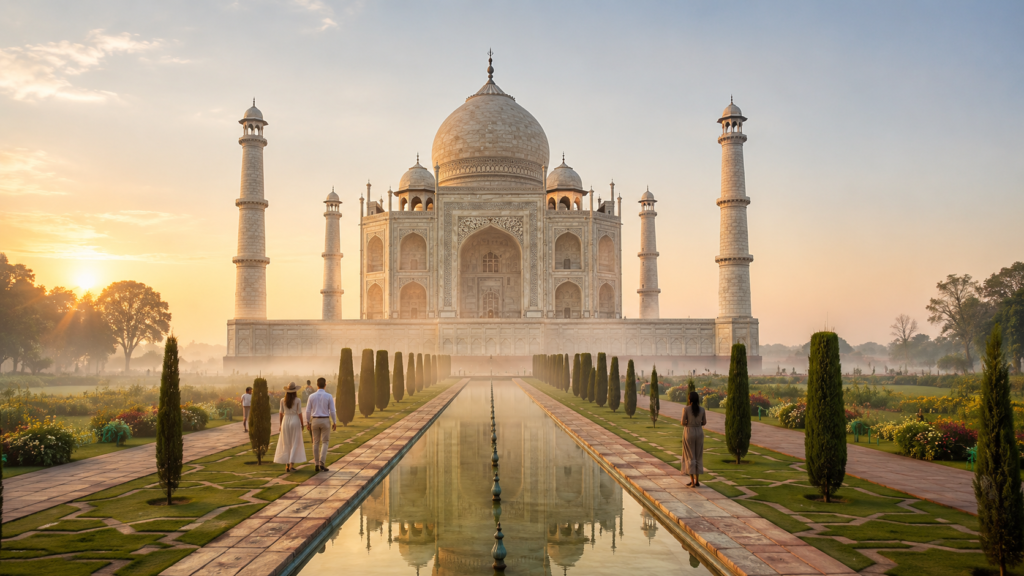
The best time to visit the Taj Mahal is generally during the cooler months, particularly from October through March, when sightseeing in Agra is usually more comfortable than during the intense summer heat. For many travellers, an early-morning visit offers the most rewarding combination of softer light, cooler conditions and a more atmospheric experience.
That said, there is no single perfect time for everyone. The ideal visit depends on whether you prioritise comfortable weather, photography, lower visitor pressure or the changing appearance of the monument throughout the day.
Understanding Agra’s seasons and the Taj Mahal’s visiting schedule makes it easier to plan a visit that feels considered rather than rushed.
For most international travellers, October to March is the most practical period for visiting the Taj Mahal, with the cooler part of the season particularly comfortable for sightseeing.
The official Taj Mahal website notes that the monument opens 30 minutes before sunrise and closes 30 minutes before sunset on normal operating days. It is closed to general visitors on Fridays.
The official tourism information for Agra also identifies spring and autumn as favourable periods, specifically February to April and September to November.
For travellers planning around photography, Taj Mahal sunrise is especially appealing. The official visitor guidance itself identifies sunrise as preferred by many visitors, noting the changing appearance of the marble and the advantages of visiting early.
These months can be an excellent choice for a Taj Mahal tour. The harsher heat of the preceding months has eased, while the weather is generally more suitable for spending time outdoors.
Early mornings can still feel cool, making a light layer useful. The changing light around sunrise can also create attractive conditions for photography.
Winter is one of the most popular periods for visiting Agra.
Daytime sightseeing can be comfortable, but winter mornings may be quite cool and periods of haze can affect visibility. If photography is a priority, flexibility is useful because atmospheric conditions can change from one morning to another.
An early start remains worthwhile, particularly for travellers who want to experience the Taj Mahal before the day becomes busier.
March can offer a useful balance between cooler winter conditions and the warmer months ahead. Temperatures begin to rise, however, so an early visit is increasingly attractive.
For travellers combining Agra with Delhi and Rajasthan, March can work well as part of a broader northern India itinerary, subject to the year’s actual weather conditions.
Taj Mahal in winter can be wonderfully comfortable for sightseeing, but it is important to distinguish pleasant daytime weather from early-morning conditions.
December and January mornings can be cold, and haze or fog may sometimes affect visibility. This matters particularly to photographers hoping for a perfectly clear view at sunrise.
The advantage of winter is that once the morning clears, exploring the wider Agra area is generally more comfortable than during the peak heat of summer.
If you are travelling during winter, bring layers rather than relying on a single heavy garment. A private itinerary can also make the morning easier: after an early Taj Mahal visit, you can return for breakfast and continue sightseeing once the day has warmed.
The Taj Mahal in summer presents a very different experience.
Agra becomes increasingly hot from April onwards, with May and June generally among the most demanding months for outdoor sightseeing. Extended periods in direct sunlight can be uncomfortable, particularly around the middle of the day.
For travellers visiting during this period, timing becomes especially important.
An early morning visit is preferable to spending the hottest part of the day at the monument. Carry water as permitted by current visitor regulations, dress appropriately for the conditions and allow time indoors or in air-conditioned surroundings between outdoor activities.
The official Taj Mahal guidance currently confirms that water bottles are permitted, although travellers should always check the latest rules before visiting.
The Taj Mahal in monsoon can be an appealing alternative for travellers who do not mind unpredictable weather.
Rain showers can bring periods of high humidity, wet surfaces and overcast skies, but they can also give Agra a greener appearance and produce changing atmospheric conditions around the monument.
Visitor numbers can vary with the weather, although it would be misleading to promise consistently quiet conditions.
For photography, monsoon skies can be interesting precisely because the light is less predictable. The key is flexibility: a clear interval after rain can produce very different photographs from a bright, cloudless morning.
For many visitors, sunrise is the best time to visit the Taj Mahal.
The early light changes the appearance of the white marble, while cooler temperatures make walking more comfortable. An early arrival can also help travellers avoid some of the later daytime pressure.
The official Taj Mahal FAQ specifically recommends sunrise for many visitors and highlights both the early light and the potential to avoid heat and crowds.
Morning remains an excellent choice even if you are not specifically aiming for sunrise.
The light gradually becomes brighter, temperatures remain relatively comfortable during cooler seasons and there is enough time afterwards to explore Agra Fort or other attractions.
Afternoon visits can work, particularly in the cooler months, but the quality of light changes considerably throughout the day.
During hotter months, however, the combination of strong sunlight and high temperatures makes the middle of the day less appealing.
A Taj Mahal sunset can offer beautiful changing light, although visibility and atmospheric conditions will determine the result.
Travellers interested in seeing the monument at different times can also consider viewing it from across the Yamuna rather than relying solely on an interior monument visit. The official Taj Mahal site identifies the area around Mehtab Bagh as a viewpoint for different morning and evening perspectives.
For Taj Mahal photography, early morning is often the strongest starting point.
The light develops gradually, giving photographers changing conditions rather than one fixed look. Winter haze can sometimes soften distant views, while clearer mornings may reveal sharper architectural detail.
A few practical principles help:
Photography should be approached with the site’s current regulations in mind. For example, the official Taj Mahal website currently states that drone cameras are prohibited and that tripods require appropriate permission.
There is no guaranteed way to have the Taj Mahal to yourself, particularly during popular travel periods.
However, travellers can make sensible choices to improve the experience:
For a premium private journey, the advantage is less about eliminating crowds and more about removing unnecessary logistical friction.
[Internal Link: Taj Mahal Tours]
Allowing around two to three hours for the Taj Mahal itself is a sensible starting point for many travellers, although the ideal duration depends on your pace, photography interests and whether you want time to explore thoroughly.
Do not forget that Agra offers more than the monument.
A well-paced visit can combine the Taj Mahal with Agra Fort, and travellers with additional time can consider other heritage sites or viewpoints.
The official Taj Mahal site lists Agra Fort and several other historic attractions among the city’s principal places to visit.
This is where a private itinerary can make a difference. Rather than arriving in Agra, visiting the Taj Mahal and immediately leaving, travellers can allow the city to become part of the journey.
For travellers arriving as part of the Golden Triangle, Agra can also be planned as a meaningful stage between Delhi and Jaipur rather than simply a stop on the road.
[Internal Link: Golden Triangle Tours]
For many travellers, the cooler period from October to March is the most comfortable. February and March can also offer favourable conditions, while September to November is another useful period to consider. The best month ultimately depends on your tolerance for heat, photography priorities and wider India itinerary.
For many visitors, yes. Sunrise offers cooler conditions and changing morning light, and the official Taj Mahal website identifies sunrise as a preferred visiting period. It is particularly attractive to photographers and travellers who want to begin sightseeing early.
No. The Taj Mahal is currently closed to general visitors on Fridays. On normal operating days, the official site states that visiting begins 30 minutes before sunrise and ends 30 minutes before sunset. Always verify the latest official information before travelling.
For most travellers, winter is more comfortable for outdoor sightseeing because temperatures are generally more manageable than during the hottest months. However, winter mornings can be cold and haze or fog can affect visibility, so photographers should allow some flexibility.
Around two to three hours is a useful starting point for the monument itself. Travellers with strong photography interests or a slower pace may want longer. If possible, allow additional time in Agra for Agra Fort and other heritage attractions.
The best time to visit the Taj Mahal depends on more than the calendar. The season, time of day, weather, photography priorities and the way the wider Agra itinerary is arranged all influence the experience.
For travellers who value comfort and flexibility, TajGateway can arrange a private Taj Mahal experience with personalised itineraries, local expertise and comfortable chauffeur-driven transportation.
Whether Agra is part of a focused visit or a wider Golden Triangle journey, thoughtful planning allows the Taj Mahal to be experienced at a pace that suits you.
[Internal Link: India Luxury Tours]